 |
| Dear Reader, Thank you for your attention to Day Poems. I'm resting this site. Please browse the existing posts for ideas for your own writing. For good poems to read, hop over to Yoga Stanza. |
Wednesday, February 12, 2014
Thank Ewe.

Friday, February 7, 2014
Poetic Mind Tip #5: Take Local Poetry Classes
Learn from others. Identify poets in your town offering classes. These may be available through a college, community center, or out of a private home.
You'll be prompted through creative exercises. This poem, "Halfway," emerged from a class offered by Sacramento's Susan Kelly-DeWitt. Susan encourages creative leaps in writing and revision. She had us pass our poems through an online translation program that placed the poem in Russian, then back into English.

In "Halfway," I had started with the word "noon." The translation led to the notion of a midpoint, which opened the poem to new possibilities.
It's never too late to start writing poems. Teachers welcome new and seasoned writers. When thinking about how a poem happens, all experiences contribute to the discussion. SIgn-up for a class. Create. Support your local teaching artists.
Thursday, February 6, 2014
Stories on Stage-Davis
Saturday evening, February 8, actress Analise Langford-Clark will read my story "Learning to Swim" for Stories on Stage - Davis. For more on the event, please see a preview article in The California Aggie. Hope you can attend!
Tuesday, February 4, 2014
News & Poems
Writing a poem is unpredictable. A poem may be delivered by the muse to receptive ears within hours. These are a gift! Another poem may take decades to complete. Once completed, a poem's destiny is uncertain; it may never be heard by anyone other than the poet's sleepy cat or tolerant friends. Very few poets attain such stature that they have a ready audience for their work.
Journalists, on the other hand, usually work quickly and know their work will be widely read. Their stories are archived.
Mary Akers, editor of r.kv.r.y. quarterly, invited journalist Matt Weiser and me to have a conversation about the processes of writing news and poems. Click here to read the exchange. Mary has a field for comments if you want to weigh in.
 |
| Eliza Griswold is a contemporary poet and journalist. |
Monday, February 3, 2014
Daily Prompt: A Poem about Letter Writing
To improve, writers reflect on the process of what happens as they write. On Day Poems, I've offered up the value of having a pen pal, sending a postcard, and making a card to give to someone. Try writing a poem about writing a letter. Doing so requires you to consider audience, setting, and character.
Writing is a solitary act. You enter into a relationship with your reader that is imagined before it's realized. Somewhere I read that a relationship exists before the people are there to fill it. In this way, writing is an act of faith. Writing a letter exemplifies that faith: you compose in the present moment something you hope will reach the hands of another at a later time. (If you've ever sent a letter and had it returned to you months later, then opened and read what you'd intended for the recipient, you've had that somewhat surreal experience of interiority, gotten a peek into your internal workings.)

Daily Prompt: Write a poem about writing a letter. For an example, read "Preparing a Missive," a poem I wrote while thinking about my Ohio pen pal. My thanks to elephant journal for publishing it this week.
Writing is a solitary act. You enter into a relationship with your reader that is imagined before it's realized. Somewhere I read that a relationship exists before the people are there to fill it. In this way, writing is an act of faith. Writing a letter exemplifies that faith: you compose in the present moment something you hope will reach the hands of another at a later time. (If you've ever sent a letter and had it returned to you months later, then opened and read what you'd intended for the recipient, you've had that somewhat surreal experience of interiority, gotten a peek into your internal workings.)

Daily Prompt: Write a poem about writing a letter. For an example, read "Preparing a Missive," a poem I wrote while thinking about my Ohio pen pal. My thanks to elephant journal for publishing it this week.
Sunday, February 2, 2014
Poetic Mind Tip # 4 : Keep a Notebook
Thanks to elephant for publishing my poem "On the Island of Recollection." While culling old journals in December (an annual ritual) I found the poem scribbled on a final page. It needed some reworking. Since I had started the poem years ago, I've written about rubber boots and read Krishnamurti's writings on memory and Lewis Hyde's on gifts. All that ended up in the poem, this time around.
This leads me to...
Poetic Mind Tip #4: Keep a notebook.

It doesn't have to be a journal or diary, meaning you don't need to write in it daily. But keep a pad handy, jot down ideas, let them sit, and reread them occasionally. You may find an idea you want to pursue. There are lots of great books on journaling. Kay Adams's Journal to the Self is one. And I recommend Terry Tempest Williams's When Women Were Birds for an unusual perspective on journal keeping and the creative self.
Sunday, January 26, 2014
Daily Prompt: Not Too Late
One of the best things about Sacramento is the Third Sunday poets. Anyone is welcome; the venue varies; participation is free. Group members take turns creating prompts. Last fall, I volunteered to facilitate. I arrived at The Book Collector with pages of poems and ideas. And waited. And waited. Would no one show? I bought a good book (M.C. Richards) and packed to leave.
Then, Nancy hurrying toward the door. We sat on the floor and got started. The day became like one of those cloth dolls that changes when flipped. We talked and wrote...and another woman arrived. I have heard church-going friends quote, "Wherever two or three are gathered...." It did feel as if our little group was granted inspiration.
Nancy Wallace wrote this beautiful poem.
from the market and called his name,
the french toast and coffee and a new bundle of herbed eggs
had already begun in the bright kitchen needing only
the radio tuned to Duke Ellington and the fork
in my mouth with buttered eggs on it to
begin an October Sunday breakfast oh
so
sublime

Daily Prompt: Been late somewhere, sometime? What happened? Borrow Nancy's title, "Why I Was late."
To read Nancy's "Winter in Detroit," visit Yoga Stanza.
To read Nancy's "Winter in Detroit," visit Yoga Stanza.
Friday, January 24, 2014
Poetic Mind Tip #3: Make a Card
When you hand-craft a card for someone you love, you hold the person in your mind as you cut, paste and stitch and prepare a surprise.
Below are two Valentine beauties for inspiration.

Monday, January 20, 2014
Daily Prompt: Send a Postcard
A poem can take the form of a letter. Richard Hugo wrote to Kizer from Seattle:

Dear Condor: Much thanks for that telephonic support
from North Carolina when I suddenly went ape
in the Iowa tulips. Lord, but I'm ashamed.
I was afraid, it seemed, according to the doctor
of impending success, winning some poetry prizes
or getting a wet kiss. The more popular I got,
the softer the soft cry in my head: Don't believe them.
You were never good. Then I broke and proved it.
Ten successive days I alienated women
I liked best. I told a coed why her poems were bad
(they weren't) and didn't understand a word I said.
Really warped. The phrase "I'll be all right"
came out too many unsolicited times. I'm o.k. now.
I'm back at the primal source of poems: wind, sea
and rain, the market and the salmon.
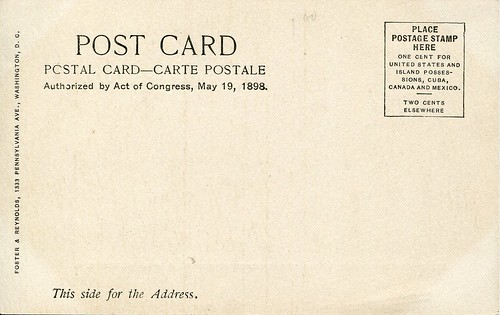
Letters are wonderful. But a postcard requires concision: the perfect combination of form and function.
Daily Prompt: Write a poem, your own or another's, on a postcard and stick it in the mail. Need an addressee? Send to poemcrossing at the Rural Oklahoma Museum of Poetry.
Thursday, January 16, 2014
Autobiography, a poem
Thank you to Inlandia for publishing "Autobiography," a poem about wind.

The journal includes inspiring photographs and recordings of most poems. Check it out.

The journal includes inspiring photographs and recordings of most poems. Check it out.
Wednesday, January 15, 2014
Daily Prompt: Full Moon Poem
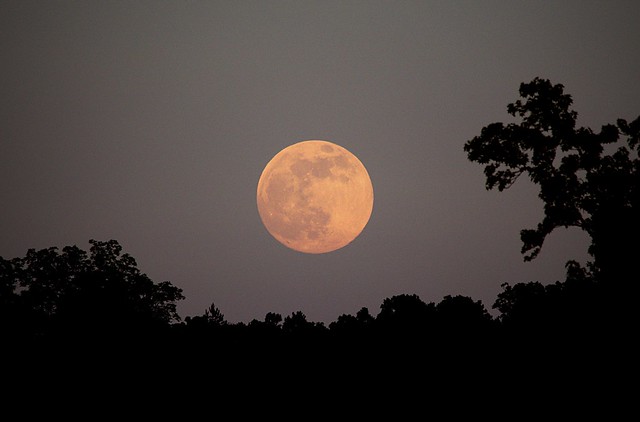 Tonight, a full moon. This January moon is called Old Moon or Full Wolf Moon. Each month's moon has a name. Some occurring later in the year include Snow Moon, Worm Moon, Pink Moon, Strawberry Moon, Sturgeon Moon, Hunter's Moon. (A full list with dates can be found at the Farmer's Almanac.)
The moon is a poet's delight. I've carried this moon poem with me for years.
WELCOME TO THE MOON
Welcome precious stone of the night,
Delight of the skies, precious stone of the night,
Mother of stars, precious stone of the night,
Excellency of Stars, precious stone of the night.
Anon., translated from the Irish
I've written my share of moon poems. This one, about a sliver of moon, appeared in Kritya.
MOON CANOE
Tonight the moon is a canoe
alone in the light soaked city
sky. Other places darkness
of night floods spaces between
trees and boulders, along shores
and above lakes. So many canoes
dugout, fiberglass, plank, aluminum,
perfect form of floating. In you
I’ve glossed rivers and lakes capsized
more than once spending days after
in damp clothes and sleeping bags.
Moon canoe, you are moving to
full each night. White pool, we are
your paddlers.
alone in the light soaked city
of night floods spaces between
trees and boulders, along shores
and above lakes. So many canoes
dugout, fiberglass, plank, aluminum,
perfect form of floating. In you
more than once spending days after
in damp clothes and sleeping bags.
Moon canoe, you are moving to
full each night. White pool, we are
your paddlers.
Daily Prompt: Go outside tonight and observe the moon. Write a poem to or about it, four lines or longer. Perhaps set a month-poem challenge: a poem a month about the full moon.
Tuesday, January 14, 2014
Poetic Mind Tip #2: Read the Funnies
The funnies, as my spunky grandmother called newspaper comics, are to your poetic mind what a daily dose of vitamin D is for your body.
 Giggling/chuckling/guffawing/ laughing over Baby Blues or Zits stimulates belly, heart and imagination. Tracking the drama of Mark Trail's adventures sharpens concentration. Like poetry, humor relies on insight, juxtaposition, originality, timing, nuance and irony. See Dilbert, Pickles, Luann, Drabble, Foxtrot, Doonesbury and Frazz. Other strips (Wee Pals, Mutts, Non Sequitur) get you thinking about humanity. Frank and Ernest utilizes the poet's key tool: word play. And check out Beakman Jax. While ostensibly answering children's science questions, Jax shines a light on life's paradoxes and absurdities.
Two online sources for comics are The Washington Post and The Sacramento Bee. I read 'em in print with the Bee before tackling any other news.

Two online sources for comics are The Washington Post and The Sacramento Bee. I read 'em in print with the Bee before tackling any other news.
Thursday, January 9, 2014
Poetic Mind Tip #1: Correspond with a Pen Pal
This is my letter to the world that never wrote to me. - Emily Dickinson
Poems allow us to slow down, notice, reflect. Lyric poems, especially, hold a moment still--long enough to view it--the way a photograph or a painting can. A difference with the poem from visual art, however, is the degree of internalization. A word, and its sound, functions as thin gauze of meaning. Picture a beaded curtain hanging in a doorway, each bead a letter, each strand a series of words that make lines. You can slip through those dangling strings of beads and get somewhere else, to the other side of a question or into a deeper awareness.
Why bother? What's so great about being aware, present, sensitive even? You have to answer that for yourself.
I can tell you that this quality of attention necessary for writing poems, what I call "the poetic mind," can be cultivated in other ways. One of the most satisfying? A pen pal.

Write a detailed letter, by hand preferably, calling on powers of observation, description, and a sense of interiority. There's an element of gift-giving, which poems also have, the notion of making something for someone else as a way of sharing the world. Among poets are great letter writers, Rilke, Neruda, Bishop and more. But you don't have to be a great poet to write a great letter. Find someone in another city, state or country and take the time to write. Within a few months, your relationship to time will change and you'll be thinking more like a poet, which is to say, like someone who believes in truth and beauty, in being present and noticing.
Need inspiration? Check out The Letter Project.
Saturday, January 4, 2014
Bruce Forman's "Journey"

The silent vastness envelopes you
within a stark white world--
an icy stream cascades from
sun-polished peaks.
-Bruce Forman
Remember OR7, the lone wolf that journeyed into California in 2012? Naturalist Bruce Forman brings OR7's story to the stage. I worked with Bruce on revising the poem that will be performed with music and dance. The project merges art and science--two sides of the same coin of life.
Come see!
Backstage:
1. What inspired you to write "Journey"?
The long solo journey for a young wolf to take...is inspirational. The idea of wolves re-establishing in California after being extirpated is exciting; it may still take years, but it's now possible. Who knows, maybe OR7 will come back with a female wolf.
2. What steps did you take to prepare the poem for performance?
I went through an analysis of scenes that worked fine as a poem but needed more time to breath on stage for dance movements, for emotions to gel, for artistic quality to be realized. Having a poetry critique and feedback from dancers really helped.3. How does art figure into environmental education?
Art is very important in environmental interpretation or education as it appeals to a person very differently than information. Art can inspire, evoke emotions, express a point in a way that way words have difficulty. Art, whether music, dance, masks, costumes, lights and/or the poetic verse, adds key layers of the experience that can change a person's attitudes, emotions and ultimately behavior. Information is important as a foundation, hence my interest in having a wolf lecturer to open the program with the science and politics of wolves. And the storytelling element which follows adds to the richness of perspectives about wolves.4. What facts would you like people to know about wolves?
Wolves have a right to live just an any other animal, for their own intrinsic value. Wolves as a keystone species are vital for healthy food chains and the balance of habitats. Wolves are team players with various roles that help a pack survive. We can learn much from wolves, from parenting to hunting to reducing stress and increasing compatibility within a pack. Wolves are excellent communicators. Wolves represent hope, for the recovery of nature in our world. We need to have more of [what Aldo Leopold calls] their glow of "green fire" in our society, by first finding our own green fire.5. Have you encountered a wolf in the wild?
I experienced seeing a distant wolf on my honeymoon in Alaska at Denali National Park. It had this haunting, stoic look, gazing out on the vast open mountainside. But in terms of intimacy [with the wild], it'd have to be swimming with a wild dolphin in outer cays of Belize on scuba trip. After a full day of diving, docked at a tiny island, I joined a dolphin near sunset, and we swam and played. It was very perceptive, affectionate and powerful.6. Tell us about your other projects as a naturalist and writer.
I'm working on a new book of poems on cranes and introspective elements, from love to loss, friendships to aloneness, dreams to realities of living, and a few oddballs. It will be accompanied by awesome crane photographs and illustrations. The writing is largely done, photographs taken and moving into next steps of production, hopefully in time for fall. Possibly as an accordion book with book ends so the changeable beauty of it can be displayed.
As a naturalist, I'm involved with starting a new wildlife festival in the region, developing a new trail at an awesome yet trail-less natural site in the region filled with wildflowers, waterfalls and unusual, less seen wildlife. And I'm expanding an environmental education project (in its 29th year) to advance environmental science and conservation literacy of youth. I'm also wanting to return to Alaska with my family and close friends, to raft the Alsek-Tatshenshini Rivers over two weeks, and howl with the wolves.
Tuesday, December 31, 2013
Currying the Horse, a story
Thank you to Wilderness House Literary Review for publishing this excerpt of my novel manuscript Tangle Creek.

Read the full story here.
Iris reached for the curry comb. When John handed it to her their hands grazed at the sides of their palms, causing Iris to shiver in ripples along her spine as the horse had. Goosebumps raised up on her arms where her cardigan sleeves were pushed back.
She took the comb. John covered her hand with his, stepping behind and encircling her, not near enough for contact, a distanced embrace just close enough to warm the air between them, an insulating layer in the space of their separate lives. Reach, sweep, brush. The barn door was open. A crisp breeze traveled through the alleyway, freshening the stall. It brought to Iris’ lips a taste of the nearness of spring beyond winter’s im- mediacy. She panted from exertion.
“Gently over his shoulders and hips,” John said softly. Iris felt sweat moisten her neck and bead on her forehead. John pulled back from her. She moved from the horse’s off-side to his right side, intent on the sweep- ing motion, willing herself to work out the tug she felt in her heart, the ache in her belly. She could forget herself in this task. She could clean and tend and wear herself out this way.
Read the full story here.
Saturday, December 28, 2013
Interview with Connie Gutowsky
The newest collection from Sacramento poet Connie Gutowsky is Play. In the word "play" lies the Middle Dutch root pleien for "leap for joy, dance." Connie has brought her delight in words, word-play, music, image and meaning to my workshops on creativity, poetry memorization and Day Poems through the years. She's also invited me to work with her on polishing poems. Putting our heads together over her luminous poems while sipping coffee at an outdoor cafe are treasured times.
Below is a poem from Play.
Read on for an interview with Connie, an attorney with keen attention to detail and broad experience with people.
CHICAGO
August 2013
past giant sculptural heads with human faces—
fuchsia, fern, & other floral hairdos popping
out their tops.
historic high school campus, enter what once
had been his father’s fire station, stop for deep-dish pizza,
work museums, & later take the river tour.
Three—taxi to afternoon tea at the Drake Hotel.
Hailey, brown-haired, brown-eyed, ten-year-old,
selecting words from the menu,
on a banquette, the waiter snaps our photo before I flip
my Chocolate Opera petit four;
bittersweet frosting smears my white cuff—
steep, rest a strainer on the cup’s lip,
then pour. For the second cup, I forget the strainer,
my mouth awash with dark leaves. The harp plays on.
a string of perfect days
clad in terra cotta,
ginger plum red.
A window into a poetic mind
1. The title of your collection is Play. Why "play"?
I chose the book title Play because as I organized the poems into sections, I noticed the word “play” appeared in at least one poem in each section. I was hoping to evoke the many meanings of “play” in my title.
2. Does play come into your writing process? How?
My practice of poetry includes reading, writing, and bringing poems to study groups for critique. It feels like “play” — endemic to our species— in that it is absorbing, outside routine life, a kind of performance requiring practice, imaginative and brings happiness.
3. When did you start writing poetry? Why?
I began studying and writing poetry seriously in 2002 after retiring from the practice of law. I had leisure and the opportunity to pursue an interest first aroused when a was a young student.
4. You paint as well. How do painting and poetry influence each other in your work?
Painting and poetry influence each other in my experience by calling for attention.
5. How does your background as an attorney influence your poetry--subject matter, style, other ways?
As a criminal defense attorney, I became enured to the importance of communicating with clients, judges, juries, family, and colleagues in clear, persuasive often creative but plain-spoken language. I learned to become capable of my fears and limitations.
6. This past summer, you participated in a Day Poems workshop. How did that process affect your writing?
Participation in the Day Poems Workshop affected my writing by expanding my intention to pay attention, to take time, to play with and in the present.
7. What poets do you enjoy reading?
I rarely re-read poets right now. I’m so involved in workshops which introduce me to new-to-me poets. I try to find something to like in every poet I read. Some favorites are: Szymborska, Whitman, Moore, Haas, Hall, Eliot, Jon Davis, Levertov. Too many to name.
I rarely re-read poets right now. I’m so involved in workshops which introduce me to new-to-me poets. I try to find something to like in every poet I read. Some favorites are: Szymborska, Whitman, Moore, Haas, Hall, Eliot, Jon Davis, Levertov. Too many to name.
8. You travel. What's the most poetically inspiring place you've ever visited? Why is it inspiring?
I tend to be inspired wherever I travel. Europe in my 20's, Chicago-always, NYC always, even my home town and anyplace in Oregon. I am inspired when I travel because my mind-set shifts in unexpected ways.
I tend to be inspired wherever I travel. Europe in my 20's, Chicago-always, NYC always, even my home town and anyplace in Oregon. I am inspired when I travel because my mind-set shifts in unexpected ways.
 |
| Play by Connie Gutowsky (Random Lane, 2013) |
9. You've studied poets and their biographies. If you could invite a poet, dead or alive, to dinner, who would it be? What would you serve? Why?
I’d invite Wislawa Szymborska to dinner and serve her a pork chop with sauerkraut because she wrote an essay, “Nervousness,” in her book Nonrequired Reading, about seeing Czeslaw Milosz in a restaurant when she was a young writer, horrified that he was relishing a serving of a pork chop with sauerkraut. Years later, she found herself dining out, glanced over to unexpectedly find the great poet there also; both having ordered that same dish.
I’d invite Wislawa Szymborska to dinner and serve her a pork chop with sauerkraut because she wrote an essay, “Nervousness,” in her book Nonrequired Reading, about seeing Czeslaw Milosz in a restaurant when she was a young writer, horrified that he was relishing a serving of a pork chop with sauerkraut. Years later, she found herself dining out, glanced over to unexpectedly find the great poet there also; both having ordered that same dish.
10. You are active in Sacramento poetry workshops. What is the role of local community in shaping a poet?
The role of the local community in shaping a poet: support, inspiration, introduction to the vast world of poetry and guidance therein, camaraderie, mentoring, play. We in Sacramento are lucky to have a rich poetry community.
The role of the local community in shaping a poet: support, inspiration, introduction to the vast world of poetry and guidance therein, camaraderie, mentoring, play. We in Sacramento are lucky to have a rich poetry community.
11. What's your favorite poem from your collection? Tell us the story behind that poem.
In one of my poems, the lines “our mother instructs each one of her eight children/You are practically my favorite child." I feel that way about each poem in my book. There is a story behind (and within) every one.
Thursday, December 26, 2013
Daily Prompt: Jackets and Blouses
 A friend and I were trading clothes the other day--swapping jackets and tops that no longer suit us or we've tired of--and I remembered this poem. I wrote it for a friend I knew in Yucca Valley. In chronological age, Ollie was old enough to be my grandmother, but we were kindred spirits. I never thought about years when we were together; just fun.
Elegy for Iola
The jacket with four round black buttons—
I wore at work all day while I talked
About Odysseus and his journey home…
The shroud Penelope wove during the day, unraveled at night.
The sleeveless blouse with a zipper up the back,
I wore last Saturday sitting on the patio
With the sun on my shoulders for the first time this year.
I haven’t worn a full-length slip
Since I was a girl in velvet dressed for an assembly.
This old slip feels silky and cool.
I’ll wear it beneath a green dress at a wedding next week.
The stitches you sewed are small and even,
And even though the red blouse’s fabric is shiny from ironing,
the print has barely faded.
first published in The Packinghouse Review
Daily Prompt: Write about a piece of clothing special to you.
Monday, December 23, 2013
Daily Prompt: The Parts of the Sum
I studied classical guitar for eleven years and practiced my share of scales.
The Day Poems practice (writing a poem-a-day for a set amount of time) is similar to playing scales. The discipline of paying attention, striving for accuracy, and listening closely transfers into the poems you write outside of the Day Poems series. It works.
Thoughts to encourage you to get started on Day Poems.
Poets are list makers. We collect images, words, snippets of conversation, symbols, sounds, flavors, forms, rhymes, titles. We are jackdaws, filling our nests with shiny things that catch our eyes. Use the power of list making as you write your Day Poems. List newspaper headlines to select from as titles for your poems. List words in Italian or Aramaic or Farsi to include in your poems. List all the names of your neighbors’ pets, the planets, every type of olive you can remember. Generate words. Words are like gnats: they travel in swarms. If you jot one down, more are sure to follow.

Poets are meaning-makers. They make connections between seemingly disparate things. That’s how metaphor works, connecting two unrelated things with a comparison. Allow unplanned juxtapositions to happen in your Day Poems. The practice of Day Poems breaks patterns and habits. If something seems to not fit, leave it for a bit. Give it a chance. You can always take it out later. (By the way, silly is okay, too.)
Distill your Day Poems. Even before you get to any formal revision (if you even choose to), distill. Bring observations to their essences. Fearlessly hone your insights. Let them occur. You may find that you think you are writing about garbage trucks and you are really writing about unburdening someone. Accept that insight. That’s all you have to do.
Let the Day Poems slow you down. “Art,” Theodore Roethke said, “is the means we have of undoing the damage of haste.” If you are a person who is busy, closely connected to the internet, energetic, outgoing, or otherwise on-the-go, slowing down may feel unsettling. Try breathing evenly and deeply. It helps. Experiment with speaking your words aloud as you compose them. That activates the breath and attunes you to the sounds of words and the feel of rhythm. If you have access to them, lay in a hammock to muse, or ebb-and-flow in a rocking chair or swing.
Need more help slowing down? Yoga Stanza has poems to be read aloud. You don't need to "do yoga" to enjoy them. Just read and breathe and enjoy.
Friday, December 20, 2013
"Blue without boundary"
An excerpt from "Cells of Solitude," just out in r.kv.r.y.
7. With journals as portable studios, we make things and make up things. We strive to make up to the world for our limits, each new creation–poem or painting–another hat tossed into the ring of the attempt to understand the depth and breadth of the human condition.8. By studying what happens when the sound of a jet disrupts their chorus, biologists learned that the songs of spade foot frogs form a musical camouflage that protects them from predators.9. Each person’s poem or picture enters a biophony of interrelated soundscape across time and space, like Yeats’ song of Innisfree: “And I shall have some peace there, for peace comes dropping slow,/Dropping from the veils of the morning to where the cricket sings;/There midnight’s all a glimmer, and noon a purple glow,/And evening full of the linnet’s wings.”10. Art is our ant farm, our honeycomb, labyrinth, the anthology of infinite pages; each poem is a rain drop on its way to an ocean.
Wednesday, December 18, 2013
Daily Prompt: What about 2013?
| In two weeks, a new year starts. What kind of a year has 2013 been? In "1861," Walt Whitman personifies and directly addresses the year. Notice in this part of the poem how the year seems to storm across the continent. Amid the men of Manhattan I saw you, as one of the workmen, the dwellers in Manhattan; | |
Or with large steps crossing the prairies out of Illinois and Indiana, | |
Rapidly crossing the West with springy gait, and descending the Alleghanies; | 10 |
Or down from the great lakes, or in Pennsylvania, or on deck along the Ohio river; | |
Or southward along the Tennessee or Cumberland rivers, or at Chattanooga on the mountain top, | |
Saw I your gait and saw I your sinewy limbs, clothed in blue, bearing weapons, robust year; | |
Heard your determin’d voice, launch’d forth again and again; | |
Year that suddenly sang by the mouths of the round-lipp’d cannon, | 15 |
I repeat you, hurrying, crashing, sad, distracted year. In 1861, 10 states followed South Carolina's December 1860 example and seceded from the Confederate States of America. The Civil War began in April.  Daily Prompt: Write a poem addressed to 2013. Was 2013 a man or a woman? Where was it traveling? What did 2013 wear? Conclude your poem with a string of adjectives as Whitman does ("hurrying, crashing, sad, distracted year"). |
Subscribe to:
Posts (Atom)