To improve, writers reflect on the process of what happens as they write. On Day Poems, I've offered up the value of having a pen pal, sending a postcard, and making a card to give to someone. Try writing a poem about writing a letter. Doing so requires you to consider audience, setting, and character.
Writing is a solitary act. You enter into a relationship with your reader that is imagined before it's realized. Somewhere I read that a relationship exists before the people are there to fill it. In this way, writing is an act of faith. Writing a letter exemplifies that faith: you compose in the present moment something you hope will reach the hands of another at a later time. (If you've ever sent a letter and had it returned to you months later, then opened and read what you'd intended for the recipient, you've had that somewhat surreal experience of interiority, gotten a peek into your internal workings.)

Daily Prompt: Write a poem about writing a letter. For an example, read "Preparing a Missive," a poem I wrote while thinking about my Ohio pen pal. My thanks to elephant journal for publishing it this week.
Showing posts with label daily prompt. Show all posts
Monday, February 3, 2014
Sunday, January 26, 2014
Daily Prompt: Not Too Late
One of the best things about Sacramento is the Third Sunday poets. Anyone is welcome; the venue varies; participation is free. Group members take turns creating prompts. Last fall, I volunteered to facilitate. I arrived at The Book Collector with pages of poems and ideas. And waited. And waited. Would no one show? I bought a good book (M.C. Richards) and packed to leave.
Then, Nancy hurrying toward the door. We sat on the floor and got started. The day became like one of those cloth dolls that changes when flipped. We talked and wrote...and another woman arrived. I have heard church-going friends quote, "Wherever two or three are gathered...." It did feel as if our little group was granted inspiration.
Nancy Wallace wrote this beautiful poem.
from the market and called his name,
the french toast and coffee and a new bundle of herbed eggs
had already begun in the bright kitchen needing only
the radio tuned to Duke Ellington and the fork
in my mouth with buttered eggs on it to
begin an October Sunday breakfast oh
so
sublime
Daily Prompt: Been late somewhere, sometime? What happened? Borrow Nancy's title, "Why I Was late."
To read Nancy's "Winter in Detroit," visit Yoga Stanza.
Monday, January 20, 2014
Daily Prompt: Send a Postcard
A poem can take the form of a letter. Richard Hugo wrote to Kizer from Seattle:
Dear Condor: Much thanks for that telephonic support
from North Carolina when I suddenly went ape
in the Iowa tulips. Lord, but I'm ashamed.
I was afraid, it seemed, according to the doctor
of impending success, winning some poetry prizes
or getting a wet kiss. The more popular I got,
the softer the soft cry in my head: Don't believe them.
You were never good. Then I broke and proved it.
Ten successive days I alienated women
I liked best. I told a coed why her poems were bad
(they weren't) and didn't understand a word I said.
Really warped. The phrase "I'll be all right"
came out too many unsolicited times. I'm o.k. now.
I'm back at the primal source of poems: wind, sea
and rain, the market and the salmon.
Letters are wonderful. But a postcard requires concision: the perfect combination of form and function.
Daily Prompt: Write a poem, your own or another's, on a postcard and stick it in the mail. Need an addressee? Send to poemcrossing at the Rural Oklahoma Museum of Poetry.
Wednesday, January 15, 2014
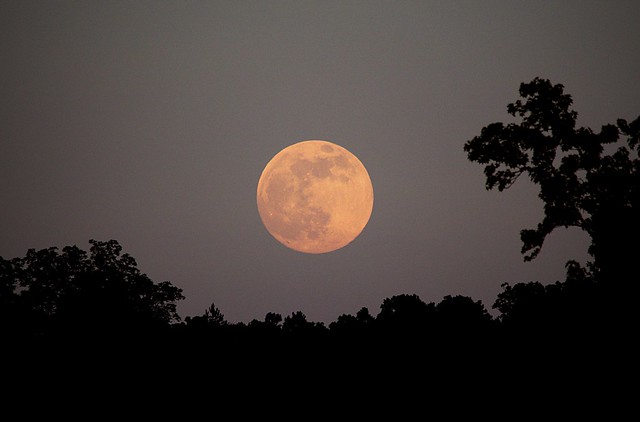
Daily Prompt: Full Moon Poem
The moon is a poet's delight. I've carried this moon poem with me for years.
WELCOME TO THE MOON
Welcome precious stone of the night,
Delight of the skies, precious stone of the night,
Mother of stars, precious stone of the night,
Excellency of Stars, precious stone of the night.
Anon., translated from the Irish
I've written my share of moon poems. This one, about a sliver of moon, appeared in Kritya.
MOON CANOE
Tonight the moon is a canoe
alone in the light soaked city
sky. Other places darkness
of night floods spaces between
trees and boulders, along shores
and above lakes. So many canoes
dugout, fiberglass, plank, aluminum,
perfect form of floating. In you
I’ve glossed rivers and lakes capsized
more than once spending days after
in damp clothes and sleeping bags.
Moon canoe, you are moving to
full each night. White pool, we are
your paddlers.
alone in the light soaked city
of night floods spaces between
trees and boulders, along shores
and above lakes. So many canoes
dugout, fiberglass, plank, aluminum,
perfect form of floating. In you
more than once spending days after
in damp clothes and sleeping bags.
Moon canoe, you are moving to
full each night. White pool, we are
your paddlers.
Daily Prompt: Go outside tonight and observe the moon. Write a poem to or about it, four lines or longer. Perhaps set a month-poem challenge: a poem a month about the full moon.
Thursday, December 26, 2013
Daily Prompt: Jackets and Blouses
Elegy for Iola
The jacket with four round black buttons—
I wore at work all day while I talked
About Odysseus and his journey home…
The shroud Penelope wove during the day, unraveled at night.
The sleeveless blouse with a zipper up the back,
I wore last Saturday sitting on the patio
With the sun on my shoulders for the first time this year.
I haven’t worn a full-length slip
Since I was a girl in velvet dressed for an assembly.
This old slip feels silky and cool.
I’ll wear it beneath a green dress at a wedding next week.
The stitches you sewed are small and even,
And even though the red blouse’s fabric is shiny from ironing,
the print has barely faded.
first published in The Packinghouse Review
Daily Prompt: Write about a piece of clothing special to you.
Monday, December 23, 2013
Daily Prompt: The Parts of the Sum
I studied classical guitar for eleven years and practiced my share of scales.
The Day Poems practice (writing a poem-a-day for a set amount of time) is similar to playing scales. The discipline of paying attention, striving for accuracy, and listening closely transfers into the poems you write outside of the Day Poems series. It works.
Thoughts to encourage you to get started on Day Poems.
Poets are list makers. We collect images, words, snippets of conversation, symbols, sounds, flavors, forms, rhymes, titles. We are jackdaws, filling our nests with shiny things that catch our eyes. Use the power of list making as you write your Day Poems. List newspaper headlines to select from as titles for your poems. List words in Italian or Aramaic or Farsi to include in your poems. List all the names of your neighbors’ pets, the planets, every type of olive you can remember. Generate words. Words are like gnats: they travel in swarms. If you jot one down, more are sure to follow.
Poets are meaning-makers. They make connections between seemingly disparate things. That’s how metaphor works, connecting two unrelated things with a comparison. Allow unplanned juxtapositions to happen in your Day Poems. The practice of Day Poems breaks patterns and habits. If something seems to not fit, leave it for a bit. Give it a chance. You can always take it out later. (By the way, silly is okay, too.)
Distill your Day Poems. Even before you get to any formal revision (if you even choose to), distill. Bring observations to their essences. Fearlessly hone your insights. Let them occur. You may find that you think you are writing about garbage trucks and you are really writing about unburdening someone. Accept that insight. That’s all you have to do.
Let the Day Poems slow you down. “Art,” Theodore Roethke said, “is the means we have of undoing the damage of haste.” If you are a person who is busy, closely connected to the internet, energetic, outgoing, or otherwise on-the-go, slowing down may feel unsettling. Try breathing evenly and deeply. It helps. Experiment with speaking your words aloud as you compose them. That activates the breath and attunes you to the sounds of words and the feel of rhythm. If you have access to them, lay in a hammock to muse, or ebb-and-flow in a rocking chair or swing.
Need more help slowing down? Yoga Stanza has poems to be read aloud. You don't need to "do yoga" to enjoy them. Just read and breathe and enjoy.
Wednesday, December 18, 2013
Daily Prompt: What about 2013?
| In two weeks, a new year starts. What kind of a year has 2013 been? In "1861," Walt Whitman personifies and directly addresses the year. Notice in this part of the poem how the year seems to storm across the continent. Amid the men of Manhattan I saw you, as one of the workmen, the dwellers in Manhattan; | |
Or with large steps crossing the prairies out of Illinois and Indiana, | |
Rapidly crossing the West with springy gait, and descending the Alleghanies; | 10 |
Or down from the great lakes, or in Pennsylvania, or on deck along the Ohio river; | |
Or southward along the Tennessee or Cumberland rivers, or at Chattanooga on the mountain top, | |
Saw I your gait and saw I your sinewy limbs, clothed in blue, bearing weapons, robust year; | |
Heard your determin’d voice, launch’d forth again and again; | |
Year that suddenly sang by the mouths of the round-lipp’d cannon, | 15 |
I repeat you, hurrying, crashing, sad, distracted year. In 1861, 10 states followed South Carolina's December 1860 example and seceded from the Confederate States of America. The Civil War began in April. Daily Prompt: Write a poem addressed to 2013. Was 2013 a man or a woman? Where was it traveling? What did 2013 wear? Conclude your poem with a string of adjectives as Whitman does ("hurrying, crashing, sad, distracted year"). |
Wednesday, December 11, 2013
Daily Prompt: City Lullaby
People need cities. Each of our cities develops a unique character based on geography and history. Why not personify a city in a poem to honor it?
When I lived in Bakersfield, I was struck by how exploited by humans the land has been. On Baker's field settlers grazed livestock before pushing over the mountains to the coast; farmers diverted the Kern River for agriculture; oilmen planted derricks. Appreciative of her resilience, I wrote a lullaby for the city.
Before sun's up, standing on the porch with coffee and silence I want to last.
The carrier's come and gone. The newspaper lies on the lawn.
This is the interlude between late night stragglers and neighbors off to work.
This is the time of clarity; it comes to me like water.
Was there a time when day broke like an orchestra's first note,
Like a brush stroke on blank canvas?
This beleaguered city sleeps for brief moments only, ragged as an insomniac
Holding on to wispy dreams of riches and good times.
Phlegmatic and gray,
She needs rest.
Sleep
Sleep Bakersfield, let the Kern run her way -
Sleep Bakersfield, leave the soil turn dark -
Sleep Bakersfield, sigh now deep,
Tired city, sleep now sleep.
Daily Prompt: Write a lullaby for a city. Imagine what she or he would want to hear. Start with where you are, in the moment, describe the characteristics of the place, conclude with a gentle lulling, using repetition.
Monday, December 9, 2013
Daily Prompt: Think Like a Poet
What does it mean to be a poet? It's not how many poems you write, what style they are written in or where there are published (or not). To be a poet is to intentionally adopt a way of thinking that expands perception beyond the literal.
Thinking like a poet frees you to dip in and out of a metaphorical way of viewing the world while maintaining the objectivity necessary to observe. Each of us filters observations through the lens of opinion and experience. That’s why a novelist can make a character come alive by telling the reader what the character notices. For example, three characters walk into an office meeting. One character notes the unraveling hemline on the skirt of her boss; another wrinkles his nose at the smell of burnt microwave popcorn; the other rushes for a seat near the whiteboard. When we read fiction, and recognize ourselves and others in the characters, we learn about ourselves and, hopefully, develop empathy for others.
Poems can also have narrators and characters. But in reading poems we learn about ourselves and develop empathy for others less from following a narrative of causes and events, motives and consequences, than by permitting an emotional response to images evoked by the poem (through "sound and sense," rhythm, music and meaning) to bubble up.
To move through life with a poetic mind, then, means opening yourself to respond as you are, with your unique self formed from your unique set of qualities, an amalgam of nurturance, nature and chance.
A metaphor takes us further.
Think of your poetic self as a duck paddling the surface of a pond, taking in quantifiable information as needed. As you paddle and bob along you participate in the physical world, noticing time of day, colors of leaves, location of other birds, whatever grabs your attention. You also, sometimes, dip into the murky waters of figurative language where light’s refraction changes angles, shadows and shapes. This is your poetic self, on and under the surface of the pond.
Daily Prompt: Set yourself the challenge of making three metaphors or similes today, combining images that catch your heart or eye. Metaphors make connections. They offer one way of stretching the literal to make room for feelings and exercising your poet-self.
Example: You see a mother wrap herself and her child in a shawl for warmth. Later, you see a branch bent from the weight of snow over a rock.
The bending branch wraps a stone like the mother drawing a child warmly into her shawl.
Tuesday, December 3, 2013
Daily Prompt: Compose
Those who are bitten by the poetry bug cannot help but compose.
Lines snag their sweaters when they are shopping for cereal; words rattle their chains in their sleeping brains. Others remember their poetic origins when they suffer a loss or celebrate a joy; they write an occasional poem marking the event for a funeral or wedding. You may be someone who has never written before and wonder if you can. Or you once wrote and abandoned the habit, or it abandoned you, and you wonder if you can write again. You can. This capacity may be dormant but it’s within you.
Yes, there is necessary mystery in the great poems, the ageless ones written by people touched by genius. A good poem, Theodore Roethke says, is a holy thing. But there is nothing mysterious about sharpening your powers of observation through the practice of poetry. And there is value in the process of trying and caring. Every creative act is an act of faith. Wonder-ful.
Process. Practice. These are kinesthetic words. Our lives are moving forward, even as we slip back in time through memory and attempt to ground ourselves in the present through work, breath and play.
Daily Prompt: "Compose" comes from "to place." Composing anything--a photo, an outfit to wear, a party, a lesson, a meal, a poem--puts you in place, in the here and now. Enjoy your composition as you are composing. Breathe back into the process of creating. Wonder at your ability to do.
Saturday, November 30, 2013
Daily Prompt: Love and Rivers
I learned to love rivers growing up in Washington, D.C. in the 1970s and 1980s. I'd ride my bike to and along the Potomac; the wide slowness of the river through town invited daydreams. Sometimes I paddled the river in a canoe with my brother, father or friends. More recently, my brother and sister-in-law took me stand-up paddling to the Three Sisters rocks upstream from Key Bridge.
Sacramento, where I live now, holds two rivers. It's not hard to imagine the history that has flowed along the city's namesake through Old Town. The American is wilder and where I go to see white-tailed kites flap and glide as they hunt insects on the wing.
This poem, "Love Poem," seems like a poem about the love among people, and it is. But the poem could not have come into being without having loved rivers first.
Love came not too late to appreciate
the step at the back door that says
I’m home. Corners have changed. Before
everything was angles. Now rooms’ edges
dissolve in companionship as embraces wake
up milled wood of the building’s frame,
stir wires that link bulbs and sockets
to a power source way, way up the hill
where a dam seals a river as
landscape’s sacrifice for this feeling.
Sacramento, where I live now, holds two rivers. It's not hard to imagine the history that has flowed along the city's namesake through Old Town. The American is wilder and where I go to see white-tailed kites flap and glide as they hunt insects on the wing.
This poem, "Love Poem," seems like a poem about the love among people, and it is. But the poem could not have come into being without having loved rivers first.
Love Poem
Love came not too late to appreciate
the step at the back door that says
I’m home. Corners have changed. Before
everything was angles. Now rooms’ edges
dissolve in companionship as embraces wake
up milled wood of the building’s frame,
stir wires that link bulbs and sockets
to a power source way, way up the hill
where a dam seals a river as
landscape’s sacrifice for this feeling.
- Alexa Mergen, poem previously published in Foundling Review
Daily Prompt: Write a love poem for someone, your own love or another's. Include an element of geography, too.
Tuesday, November 26, 2013
Daily Prompt: Taking Care of Animals
In an interview included in Talking All Morning, the poet Robert Bly says,
I agree. Writing poems is a privilege, as is caring for an animal.
Animals ask little of us. They appreciate our attention to their clean water bowls and soft beds.
Poems want to be noticed, need tending, and desire a quiet place to rest.
Practically, the hungry cat and pacing dog get us out of our poet's chair to pour kibble and grab the leash!
Daily Prompt: Take care of an animal today. This might be your grandchild who wants to play catch, the sparrows who would appreciate a clean birdbath, or your neighbor's dog who hasn't been out for a walk. Use your imagination and take care.
Taking care of animals is the best preparation for writing poems. When you write poems, you feed poems language.
I agree. Writing poems is a privilege, as is caring for an animal.
Poems want to be noticed, need tending, and desire a quiet place to rest.
Practically, the hungry cat and pacing dog get us out of our poet's chair to pour kibble and grab the leash!
Daily Prompt: Take care of an animal today. This might be your grandchild who wants to play catch, the sparrows who would appreciate a clean birdbath, or your neighbor's dog who hasn't been out for a walk. Use your imagination and take care.
Saturday, November 23, 2013
Daily Prompt: Rhythm
Rhythm is something we share in common, you and I, with all the plants and animals and people in the world, and with the stars and moon and sun, and all the whole vast wonderful universe beyond this wonderful earth which is our home.
-Langston Hughes, The Book of Rhythms
Daily Prompt: We are rhythmic beings, sleeping and waking, falling ill and being well, vacationing and working, exerting and resting. For a week, identify rhythms around you. Waiting for a bus, watch how people walk. Sitting in traffic, notice the surge and pause of cars. Reading, listen to your breath. Notice a bird in a particular tree at a particular time of day. Nod to the office worker who lunches at the same cafe as you.
Tuesday, November 19, 2013
Daily Prompt: 10 suggestions for some poems
Limits inspire creativity.
Set a limit for yourself on the length of a poem--one sentence, four lines, two stanzas--even a random choice can work. Then, choose a set period of time to write a poem a day. Writing for others gives purpose. Maybe every poem is a love poem, a gift to someone or something, in honor of being alive.
Ten suggestions for writing a poem a day leading up to an occasion:
- a week leading up to someone’s birthday as a gift to the celebrant
- a week leading up to a wedding as a gift to the couple
- five days after a new baby is born as a gift to the parent
- the day of arriving and the day of departing a house sit as a gift to the homeowner
- the week before Thanksgiving as a gift to those you care for
- three days following the loss of a loved one as a way to honor your bond
- for a month, when changing a habit, like conserving water, as a gift to the world
- for a month, when changing a habit, such as giving up caffeine, as a way to stay sane
- two days before the anniversary of a job as a gift to a mentor
- the week in preparation for a significant trip as a present to yourself
Not inspired to write? Seek out others' poems and compile them as gifts instead. Reading and choosing a poem a day can inspire as much as picking up a pen. The gift will be for yourself and another.
Wednesday, November 13, 2013
Daily Prompt: Stepping Out
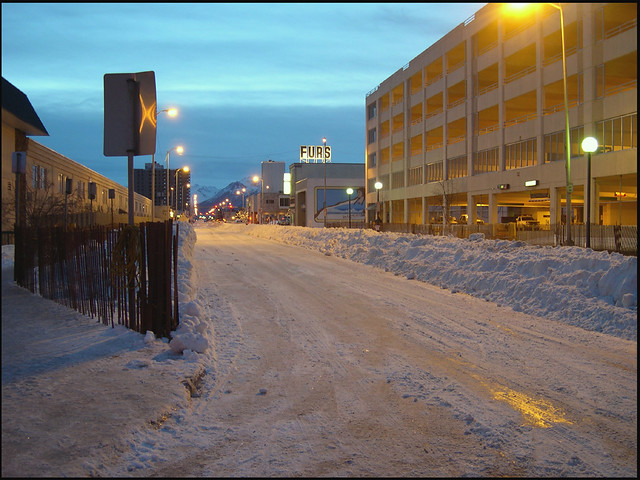
Entering: stepping off a plane, through a door, into a swimming pool. What happens when you pause at that moment of entering to notice it? This moment can be compared with the slight pause at the end of a gentle exhalation; the pause is part of the entire round of breath. So is the mini-moment of transition between then-now, here-there, past-present. Jessie Lendennie's poem "Anchorage" captures that moment.
Anchorage
And when you get off the plane
And the air is so icy
You can barely breathe
But so invigorating you're instantly high
Out of body with the purity of it all
And the streets
Wide like highways
Waiting for something to fill them
And you want to be part of this
Whatever it is that moves the light
That brings the snow
Daily Prompt: Choose a moment from your day. Even a seemingly mundane moment like stepping onto the stoop to retrieve the newspaper or entering a cafe for lunch is a moment full of possible noticing. Borrow Jessie's line, "And when you ...." and start your poem of the moment. Enjoy.
Note: Poem first published in Walking Here; used by permission of the poet
Anchorage
And when you get off the plane
And the air is so icy
You can barely breathe
But so invigorating you're instantly high
Out of body with the purity of it all
And the streets
Wide like highways
Waiting for something to fill them
And you want to be part of this
Whatever it is that moves the light
That brings the snow
Daily Prompt: Choose a moment from your day. Even a seemingly mundane moment like stepping onto the stoop to retrieve the newspaper or entering a cafe for lunch is a moment full of possible noticing. Borrow Jessie's line, "And when you ...." and start your poem of the moment. Enjoy.
Note: Poem first published in Walking Here; used by permission of the poet
Saturday, November 9, 2013
Daily Prompt: Statements of Beauty
Last Tuesday, I joined thirteen other artists for a focus group sponsored by the Sacramento Metropolitan Arts Commission and UC-Davis Extension to generate arts-based solutions for businesses. The businesses sought input on employees' communication skills, adaptability to change and creative thinking. We dancers, actors, painters, musicians, poets and arts' non-profit leaders shared ideas on how the skills we've developed in our studios and classrooms, at our desks and on stages could apply.
After I explained Day Poems, another participant, a dancer and choreographer, revealed that she uses a similar assignment. She asks her students to identify "Seven Statements of Beauty" over the course of a week. The statements of beauty are movements, not necessarily dance movements, but movement that strikes them.
The process of paying attention, whether to movement, information, images or sound, helps a person define his or her aesthetic and priorities. And enhances creativity.
Daily Prompt: Look for Seven Statements of Beauty. In autumn, movements abound in wind and shadows. Notice.
After I explained Day Poems, another participant, a dancer and choreographer, revealed that she uses a similar assignment. She asks her students to identify "Seven Statements of Beauty" over the course of a week. The statements of beauty are movements, not necessarily dance movements, but movement that strikes them.
Daily Prompt: Look for Seven Statements of Beauty. In autumn, movements abound in wind and shadows. Notice.
Monday, November 4, 2013
Daily Prompt: Airport Time
We watch ice melt in clear plastic cups embossed Frontier or United.Calculate the time change.How often men debate free will and destiny through history. Both end when we end.Before long there will be no one to carry a letter.
These lines are from my poem "Distance." The poem first appeared in Solo Novo and was selected by the Council of Literary Magazines and Presses (clmp) for Taste Test.
Read the full poem here.
This is not a Day Poem but the result of an accretion of days: I've taken hundreds of transcontinental flights between California, my adopted home, and Washington, D.C., the place I left.
Airports and flights are rich sources of poems. If you are traveling, talk with your seat mate. On a recent flight between North Carolina and Sacramento, a veteran of the Iraq war told me the story of the most brutal death he witnessed and the hardest choice he'd had to make as a combat medic. I asked him if I could use his story in a poem. He graciously said, yes. I'm working on it.
As you walk around an airport, take advantage of the strange feeling of being temporarily in and out of time, a feeling poems also evoke.
Daily Prompt: Traveling, talk with people. Slip out of time. Read a volume of poems. Jot some rhymes and images. Make airport time poetry time.
Thursday, October 31, 2013
Daily Prompt: Sentences of Reverence
An Intuition of Angels
I have not gone on pilgrimage
or lain prostrate before a saint
but long ago on a high hill
in Wisconsin, when swollen buds
burst from pale purple casings
into tender green, I danced
a liturgy and in their blaze
of autumn color, I sang an anthem.
In later years I have not often
knelt in prayer on kneelers
pulled down at church
but I’ve bent my knees
and bowed my head
into the north wind
driving against me
and when the time came
to turn back, I’ve felt its force
along vertebrae and scapulae
so strong, I knew how wings
must have evolved.
first published in In the Folds (Rattlesnake Press, 2005); used by permission of the author
Daily Prompt: Think of a time you felt reverence--in a house of worship, outside, cradling a newborn, laughing with a friend--and write two long, rolling sentences about the experience. Enjoy.
For another poem by Allegra, and more poems for reflection, visit Yoga Stanza.
Monday, October 28, 2013
Daily Prompt: The Bank of Being
Driving through a weary neighborhood of leaning porches and shattered glass, I was startled to find a preying mantis clinging to my windshield. In the yard I sometimes find the new ones, small and pale as a fingernail. This one was bright green, long as an unsharpened pencil.
I stopped the car in a gutter full of trash. I hoped to coax the creature to an envelope and transfer it to a shrub. When I leaned in with the paper, the insect jumped to the meaty part of the palm of my hand and snapped on with its six legs. It held as I raised my arm and extended it, taking in the preying mantis' architecture.
We walked together to the sidewalk. When I stepped onto the curb, the insect jumped to a utility pole. I felt charmed to have been so close to a living thing so different from me, as if extended for a moment into another realm, a science fiction world of woman-bug. And I felt sad. The creature was far from wherever it had started and was not going back.
Daily Prompt: When you see something that fascinates you, especially something small, jot down some lines. Honor the experience by taking a few moments to reflect.
Thursday, October 24, 2013
Develop the Poetic Mind
To think imaginatively, to engage the poetic mind, is to participate in the inherent human praxis of making--igniting and acting on the desire to create. Through words and images, artist, poet and teacher Susan Kelly-DeWitt joins across space, time and culture with 18th-century artist Komai Ki to celebrate the moment, which is every moment, the one(s) we mark by noticing. Thank you to Susan for permission to post her poem.
The Fortunate Islands
Here
each red maple leaf
five fingers begging alms
even the crescent moon
slicing a cloud
is a fortunate island
through which I draw
my prime meridian
my zero-line
In the ink-dark temple
the past seems far away
I can cross the wooden bridge
in either direction
(after "Maple Leaves at Mt. Takao, Kyoto" by Komai Ki, 1747-1797)
- Susan Kelly-DeWitt, from The Fortunate Islands
Daily Prompt: Stand still before something that interests you, a picture, a tree, a scene. Enter the moment. Then describe it, borrowing Susan's first word "here." Or, read Susan's poem aloud, perhaps to a tree wearing autumn foliage. Writing, reading, you're engaging your poetic mind either way. Enjoy.
Subscribe to:
Posts (Atom)